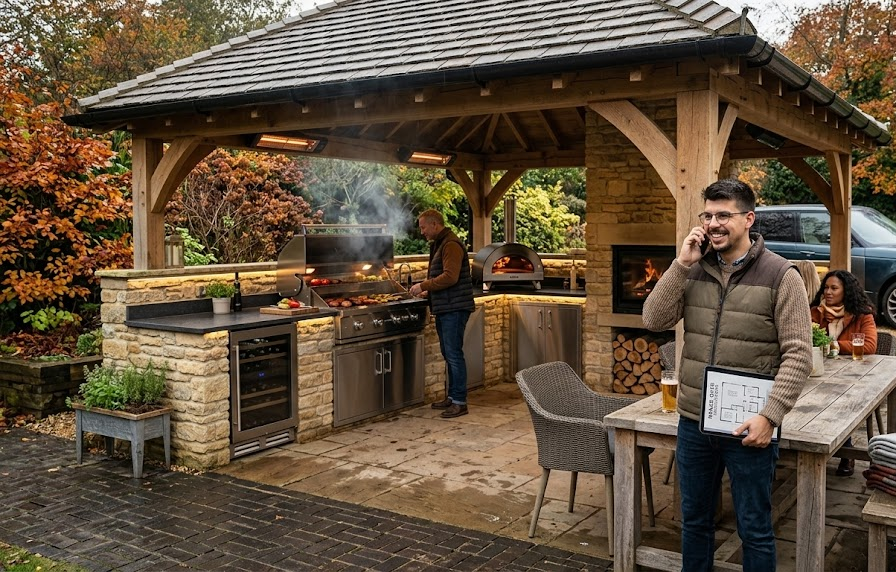
Lamb chops are cooking and drinks are flowing when the clouds suddenly burst. A British garden party can transform from sunny to soaked in minutes. Outdoor kitchens are no longer just for summer barbecues; UK homeowners now treat gardens as an extension of their living space.
According to the Met Office, the UK’s winter months (October to March) from 2015 to 2024 were 16% wetter than the average from 1961 to 1990. This shifting climate directly influences anyone hosting outdoor events. Without proper planning, an outdoor kitchen becomes a costly, underutilised feature for most of the year. Designing a resilient space ensures year-round entertainment, regardless of the weather.
At Range Over, we help you take control of your finances, wellness, and career with simple, actionable insights.
Elements to Design All-Weather Outdoor Kitchen
Here are the seven elements for designing all weather outdoor kitchen for year-round:
All-Weather Overhead Pergola Protection
A slatted roof on the pergola can be opened to let in the sun and closed when it gets cloudy. If it rains, the water will run off the angled slats rather than collect above you. You can select a frame made from stainless steel (the kind used on boats) or natural stone.
Avoid frames made from regular steel or plain wood, as these can bend and rust after just one winter in Britain. A 2026 Insight DIY report found that people in the UK plan to spend up to £10,000 on their gardens over the next five years. For that kind of money, you’ll want materials that are made to last.
Premium Frost-Resistant Worktop Materials
Frost doesn’t care about how good your worktop looks. Choose strong natural stone or stainless steel made for boats. These materials can handle freezing and thawing, which can break down less durable materials. Using high-quality materials helps ensure your surfaces stay strong and crack-free, even when harsh winter weather hits. Once you have selected durable surfaces, you should also consider the structural integrity of the base that will support them.
High-Compressive Concrete Foundations
A brick pizza oven places immense stress on ground structures, weighing hundreds of pounds when finished. You should pour a concrete base with a minimum strength of C25/30, in accordance with BS 8500. If the base will be outside and exposed to rain and freezing temperatures, simply use a stronger C30/37 concrete. If the ground is uneven, using strong engineering bricks can be a good option for a stable base.
Slip-Resistant Textured Outdoor Flooring
Smooth porcelain looks wonderful but is slippery when wet. You can opt for tiles with a rougher surface, like textured porcelain, riven sandstone, or brushed granite, and check their slip rating. Make sure the patio slopes towards a drain to avoid water pooling, and choose frost-proof tiles to prevent chipping in cold weather.
Sturdy Protective Glass Wind Screens
A strong wind can blow out a gas burner while you are cooking, and it can even send napkins flying everywhere. To shield your cooking area from the wind while still enjoying the breathtaking view of your garden, you could use sturdy glass screens. If you prefer something softer in look, wooden slats or a neatly trimmed hedge can also work well. Just ensure you place these barriers where the wind typically comes from.
For a visual representation, explore this guide that illustrates a professionally-designed UK garden kitchen layout built to withstand the weather.
Insulated Winter-Proof Utility Pipework
Pipes can freeze and break, causing issues in outdoor kitchens. To avoid this problem, ensure to bury any water pipes below the depth where the ground freezes. If there are any above-ground pipes, cover them with insulation to keep them warm. It’s also a good idea to install a faucet that won’t freeze and a shut-off valve so you can drain the water from the system before the weather gets too cold.
Adaptable Mobile Kitchen Layout Rigs
The direction of British wind and rain shifts dramatically between July and December, which can quickly ruin an outdoor hosting experience if your cooking layout is entirely fixed. Creating a flexible layout that lets you move heavy preparation tables and pizza ovens lets you quickly adjust to weather changes.
Using weather-resistant casters from specialist industrial suppliers such as Caster City ensures these heavy installations glide smoothly across stone patios without cracking the paving slabs. Opting for stainless steel rigs fitted with polyurethane wheels provides the necessary load capacity while making sure the components never rust or seize after months of exposure to rain and frost.
A map showing the direction of the wind, based on smoke observations over a season, can guide you on where to set things up. It would be helpful to ask an interior or exterior designer to also indicate safe distances for grills on this map.
Conclusion
If you want to make your outdoor kitchen in the UK a great investment, it is important to make sure it works well in all kinds of weather. Before you start building, it’s a good idea to have a professional check your site. They can help design your kitchen to handle local weather challenges. For more insights, contact us at Range Over now.
